Quick answer: Black seed oil comes from Nigella sativa seeds and contains thymoquinone, a compound studied for its ability to calm inflammation and oxidative stress. Human trials support its use for joint pain, cholesterol, blood sugar, acne, and PCOS related insulin resistance. Claims about testosterone, weight loss, and hair regrowth are weaker and mostly come from animal studies.
Rare but real case reports link high doses to kidney and liver injury, so dosage and sourcing matter more than most articles admit.
Most black seed oil articles open with the same three facts. It is called the seed of blessing. Ancient Egyptians used it. A well known hadith claims it cures everything except death. You have probably read that paragraph a dozen times already, on a dozen different sites, so we are skipping it.
What you have not read as often is what actually happens inside a body that takes 2,000 milligrams of this oil every day for eight weeks, according to the researchers who measured it. That is the version of this guide you are getting.
What Black Seed Oil Actually Is
Black seed oil is cold pressed from the seeds of Nigella sativa, a small flowering plant in the buttercup family. It goes by several names depending on where you shop or which cuisine you cook: black cumin, kalonji, black caraway, and occasionally black onion seed, even though it is unrelated to onions.
The compound doing most of the work is thymoquinone, a naturally occurring antioxidant that makes up a meaningful share of the oil’s volatile fraction. Thymoquinone is what researchers actually measure and manipulate in laboratory studies, and it is the reason black seed oil shows up in inflammation, metabolic, and oxidative stress research far more often than in isolated clinical use.
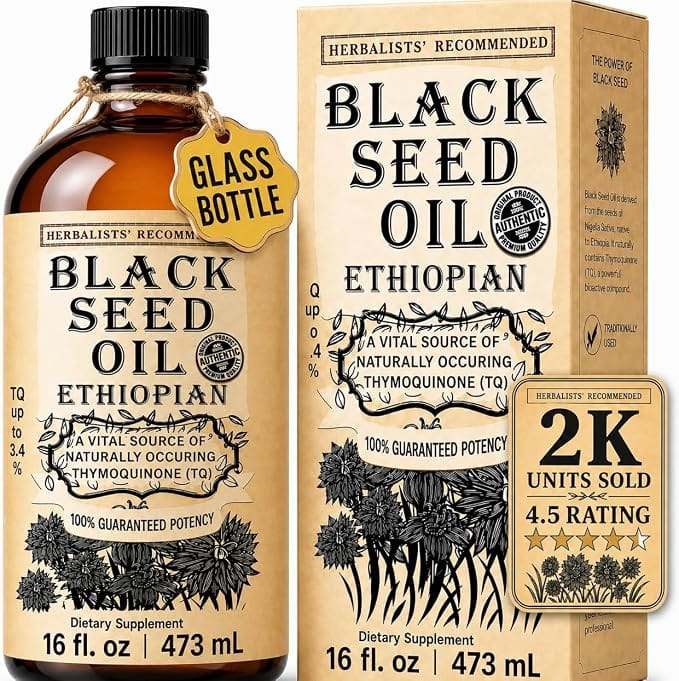
One detail that rarely makes it into consumer articles: thymoquinone content is not fixed. A 2025 comparative analysis of black cumin oils from three growing regions found that Ethiopian oil carried the highest thymoquinone concentration of the three, at roughly 35 percent, ahead of Egyptian and Syrian oil, along with the strongest antibacterial activity and the longest oxidative stability. Origin is not a marketing detail. It measurably changes what is in the bottle.
How We Graded the Evidence
Instead of listing benefits as flat facts, each claim below is graded by the type of evidence behind it, because that is the piece most black seed oil content leaves out entirely.
- Strong evidence means randomized, controlled human trials with a placebo group.
- Moderate evidence means smaller human trials, meta analyses of mixed quality studies, or consistent results across a handful of trials.
- Preliminary evidence means animal studies, test tube research, or a single small human trial that has not been repeated.
Keep this scale in mind as you read. It is the difference between a supplement that can genuinely support a specific goal and one that simply has not been disproven yet.
Black Seed Oil Benefits for Women
Women’s health content around this oil tends to lean heavily on the word hormonal without much specificity, so here is what the research actually measured.
Weight and appetite, moderate evidence. A controlled trial of 45 women with overweight or obesity gave participants 2,000 milligrams of black seed oil daily for eight weeks. The group taking the oil saw reduced appetite along with drops in body mass index, body weight, waist circumference, and body fat compared to placebo.
PCOS and insulin resistance, moderate evidence. Polycystic ovary syndrome is frequently linked to insulin resistance and low grade inflammation. Because Nigella sativa has been studied for glucose metabolism and lipid markers, several small trials, including a 2024 randomized trial in adolescents with PCOS, have tested it as a supportive option alongside standard care. Results point toward modest improvements in insulin sensitivity rather than a resolution of the underlying condition.
Episiotomy and perineal wound healing, moderate evidence. A clinical trial protocol out of Iran tested a combination of olive oil and black seed oil, applied as a sitz bath, on postpartum wound pain and healing speed in first time mothers. This is one of the more specific, clinically relevant female health applications currently under study, and it is almost never mentioned outside of nursing and midwifery journals.
Also read: Pink Salt Trick Recipe: Why Women Love It
Hormonal symptom support, preliminary evidence. Claims about PMS, thyroid function, and menopause symptoms are common in wellness content, but they are extrapolated from black seed oil’s known anti inflammatory and antioxidant activity rather than from trials that directly measured PMS or menopause outcomes. It is a reasonable hypothesis. It is not yet a proven one.
Skin pigmentation, preliminary evidence. Some research on vitiligo suggests black seed oil may help redistribute melanin in affected skin, though the mechanism is still being worked out and sample sizes remain small.
Black Seed Oil Benefits for Men
Sperm quality in infertile men, strong evidence. This is the best documented male specific finding in the entire body of black seed oil research. A randomized, controlled trial published in Phytomedicine gave infertile men 2.5 milliliters of the oil twice daily for two months. Researchers recorded significant increases in sperm count, motility, normal morphology, and semen volume compared to placebo. It is worth being precise here: this trial enrolled men already dealing with fertility issues, not healthy men looking for an edge.
Testosterone, preliminary evidence. This is where most men’s health articles overstate the science. Rodent studies have shown increased testosterone after Nigella sativa extract, and there is a plausible mechanism involving zinc and thymoquinone’s antioxidant effect on testicular tissue. But there is no strong clinical trial in healthy human men showing a meaningful testosterone increase. If a product page promises a testosterone boost, that claim is riding on animal data, not human data.
Blood pressure, moderate evidence. A trial published in Phytotherapy Research found that participants given 2.5 milliliters of the oil twice daily saw a significant drop in blood pressure with no adverse effects reported, a result relevant to both men and women managing cardiovascular risk.
Cholesterol, moderate evidence. Multiple trials, summarized in a 2024 systematic review in Clinical Nutrition ESPEN, found that regular black seed oil intake was associated with reduced LDL cholesterol and triglycerides.
Prostate health, insufficient evidence. Despite frequent mentions in men’s wellness content, there is no clinical trial showing black seed oil shrinks an enlarged prostate or treats benign prostatic hyperplasia. It may support the general inflammation load that worsens urinary symptoms, but that is an indirect argument, not a direct one.
Every Well Studied Benefit, Ranked Honestly
| Benefit | Evidence level | What was actually measured |
|---|---|---|
| Reduces inflammatory markers (CRP) | Strong | Meta analysis of 12 randomized trials |
| Knee osteoarthritis pain relief | Strong | 34 percent pain reduction vs 9 percent placebo, 116 patients |
| Lowers LDL cholesterol and triglycerides | Moderate | Systematic review of lipid trials, 2024 |
| Improves fasting blood glucose in type 2 diabetes | Moderate | Multiple RCTs, 8 to 12 week durations |
| Reduces acne severity, topical gel | Moderate | 78 percent severity reduction after 60 days of twice daily use |
| Male infertility, sperm parameters | Strong | RCT, Phytomedicine journal |
| Lowers blood pressure | Moderate | RCT, Phytotherapy Research |
| Supports weight and appetite reduction | Moderate | RCT, 45 women, 8 weeks |
| Kidney stone breakdown | Preliminary | Single RCT, 60 patients, 10 weeks |
| Hair strength and scalp health | Preliminary | Mechanistic and anecdotal, no dedicated RCT |
| Testosterone increase in healthy men | Preliminary | Animal studies only |
| Cognitive and memory support | Preliminary | Small trials in older adults, promising but limited |
Black Seed Oil Side Effects: The Kidney Question, Answered Honestly
Here is the part almost every black seed oil article either buries in a single vague sentence or skips completely.
In 2024, Toxicon published a case report of a young man who developed rhabdomyolysis, meaning muscle tissue breakdown, alongside acute kidney injury and liver toxicity after consuming black seed oil. It is one case, not a pattern across thousands of users, and the authors themselves note that data on black seed oil’s adverse effects remains limited. But it is real, peer reviewed, and worth knowing about before you take a tablespoon of anything.
The supplement database Examine.com puts a number on the risk: rare cases of kidney injury have been observed specifically at daily doses between 2,000 and 2,500 milligrams. Below that range, human trials and animal studies generally report no significant changes in kidney or liver function.
Here is the genuinely confusing part, and it is the reason this topic deserves more than one sentence. The same compound, thymoquinone, is separately being studied as a kidney protective agent. A review in the journal Antioxidants found that black cumin and thymoquinone appear to shield kidney tissue from damage caused by chemotherapy drugs, heavy metals, and certain analgesics in animal models, and small clinical trials in advanced chronic kidney disease patients showed normalized blood and urine markers. Researchers themselves state plainly that the clinical evidence is not yet sufficient to recommend it to CKD patients.
So the honest summary is this: thymoquinone appears to be protective at the doses used in most controlled trials, and rarely harmful at doses that exceed 2,000 milligrams a day, particularly in people with existing liver or kidney vulnerability, diabetes, or those combining it with other supplements. If you have any kidney or liver condition, or you are on blood thinners, diabetes medication, or blood pressure medication, talk to your physician before adding this to your routine. Black seed oil can also increase the effect of diabetes and blood pressure medications, according to Examine.com’s interaction data, which is a meaningful detail if you are already on prescription treatment for either.
Pregnant and breastfeeding women should avoid it, since there simply is not enough safety research in that population yet.
A note on US supplement regulation, since this matters more than most wellness sites let on: dietary supplements sold in the United States are regulated under the Dietary Supplement Health and Education Act, which means the FDA does not review or approve them for safety or effectiveness before they reach store shelves. Manufacturers are responsible for ensuring their own products are safe, and any bottle you buy should carry a standard disclaimer stating the product is not intended to diagnose, treat, cure, or prevent any disease. That is not a red flag specific to black seed oil. It applies to the entire supplement aisle, and it is exactly why third party testing and transparent sourcing matter when you are choosing a brand.
How to Take Black Seed Oil: Capsules, Liquid, and Real Dosage Numbers
Clinical trials most commonly use doses between 500 milligrams and 3 grams per day, with many of the positive metabolic and inflammatory results clustering around 1 to 2 grams daily, roughly half a teaspoon to a full teaspoon of liquid oil.
Liquid oil gives you flexibility. You can take it straight, stir it into honey, add it to salad dressing, or apply it topically, which capsules cannot do. The tradeoff is taste. Raw black seed oil is sharp, peppery, and slightly bitter, and it can cause a mild burning sensation in the throat for some people.
Capsules solve the taste problem entirely and make dosing exact, since each softgel typically contains a fixed amount, often 500 milligrams. They cost more per milliliter than liquid oil and cannot be used topically, but for anyone who cannot tolerate the flavor, they are the practical choice.
If you are new to black seed oil, start at the low end, around 500 milligrams to 1 gram daily with food, for one to two weeks before increasing. This gives you time to notice any digestive discomfort before you scale up toward the doses used in clinical research.
When to Take Black Seed Oil: Morning or Night?
There is no evidence that thymoquinone behaves differently in the body depending on the hour you take it. What the research does show is that the goal you are targeting lines up with a specific time of day, because that is when the relevant trials actually dosed it.
For blood sugar and metabolic goals, mornings win. In a clinical study on people with type 2 diabetes, participants took black seed oil roughly ten minutes before breakfast and saw measurable reductions in fasting and post meal blood glucose within 30 days, with insulin resistance improving further by the 12 week mark.
For sleep and stress, nights win. A randomized, placebo controlled trial had participants take one capsule after dinner, 20 to 30 minutes before bed. By day seven, 70 percent reported improved sleep satisfaction, rising to 79 percent by day fourteen, with measurable reductions in time to fall asleep and no reported next day grogginess.
For weight management, mornings, roughly 30 minutes before breakfast, appears to support the appetite suppressing effect seen in the obesity trial referenced earlier.
The one variable that matters more than clock time, across every trial reviewed for this guide, is consistency. A dose taken at the same time daily for four to eight weeks straight outperforms a perfectly timed dose taken inconsistently three days a week.
How to Apply Black Seed Oil on Your Face
Topical black seed oil has actual data behind it, most notably a study showing a 78 percent reduction in acne severity after 60 days of twice daily use of a black seed oil gel. Here is how to apply it correctly.
- Patch test first. Apply a small amount to your inner forearm and wait 24 hours before using it on your face, since sensitivity varies significantly from person to person.
- Cleanse and pat dry. Applying oil to unwashed skin traps debris underneath it rather than allowing it to absorb.
- Dilute for sensitive or dry skin. Mix two to three drops of black seed oil into a carrier oil such as jojoba or argan, or blend it directly into your regular moisturizer, at roughly a five to ten percent dilution.
- Apply with upward, circular motions, avoiding the eye area completely, since the oil can sting if it makes contact with the eyes.
- Leave it on overnight for dry or aging skin, or rinse after 20 to 30 minutes if you have oily or acne prone skin and prefer not to leave oil sitting on your face all night.
- For active breakouts, a cotton swab with a single drop applied directly to the blemish and left overnight is the most targeted, evidence aligned approach.
Give it two to four weeks of consistent use before judging results. Skin turnover and visible inflammation reduction both take time, and switching products every few days makes it impossible to tell what is actually working.
Using Black Seed Oil for Joint Pain
The clearest clinical result in this entire guide comes from a randomized controlled trial of 116 patients with knee osteoarthritis. The group taking black seed oil saw a 34 percent reduction in pain over one month, compared to a 9 percent reduction in the placebo group, along with a 28 percent improvement in physical function versus 1 percent in the placebo group. A separate trial in 40 women with rheumatoid arthritis found added benefit when black seed oil was combined with standard therapy rather than used alone.
Oral use: 1 to 2 teaspoons of liquid oil, or the equivalent in capsules, taken daily with food, works through systemic inflammation reduction by lowering CRP and TNF alpha, the same inflammatory markers targeted by prescription anti inflammatory medications.
Topical use: Massage roughly 1 milliliter directly into the affected joint, three to four times daily, for localized relief. Combining both oral and topical use is what most of the supporting research protocols actually did, rather than relying on one method alone.
Expect this to take several weeks of consistent use before you notice a meaningful difference. It is not a fast acting pain reliever the way an over the counter NSAID is.
Why Origin Matters: Ethiopian Black Seed Oil
This is genuinely underreported. A 2025 comparative study analyzed Nigella sativa oil sourced from Egypt, Ethiopia, and Syria side by side. Ethiopian oil came out ahead on nearly every measured metric: the highest thymoquinone concentration at roughly 35 percent, the richest phenolic and flavonoid content, the strongest antibacterial activity, and the longest oxidative stability, meaning it resists going rancid longer than the other two origins tested.
That last point matters practically. A bottle with a longer oxidative stability window retains its active compounds for more of its shelf life, which means what you are taking in month three is closer to what you were taking in week one. When you are shopping for black seed oil, look for three things on the label regardless of country of origin: cold pressed extraction, a visible harvest or expiration date, and third party lab testing for purity.
Origin is a meaningful factor, but a well tested oil from any of these three regions will outperform an untested oil from anywhere.
Pairing Black Seed Oil With Other Whole Food Supplements
Black seed oil is often stocked next to sea moss on the same wellness shelf, and the two get combined into smoothies and gels fairly often, so it is worth addressing honestly rather than pretending there is a clinical synergy that has actually been studied, because there is not.
Sea moss, typically Chondrus crispus or a Gracilaria species, is a red algae valued mainly for its iodine content, which supports thyroid hormone production, along with a broader mineral profile including potassium, calcium, and magnesium.
The widely repeated claim that sea moss contains 92 of the 102 minerals the body needs is not accurate; it comes from a misreading of seawater’s mineral composition rather than an actual analysis of the algae itself. What is accurate, according to Cleveland Clinic and Northwestern Medicine, is that iodine content in sea moss varies enormously between products, from roughly 47 to nearly 3,000 micrograms per gram, which makes unmonitored daily use genuinely risky for anyone with an existing thyroid condition.
If you choose to combine the two, the practical reason is nutritional variety rather than a proven interaction: black seed oil’s anti inflammatory and metabolic profile alongside sea moss’s iodine and trace mineral content covers different nutritional ground.
Anyone with thyroid disease, anyone pregnant, and anyone on thyroid medication should talk to a physician before adding sea moss specifically, given how variable its iodine content is between brands.
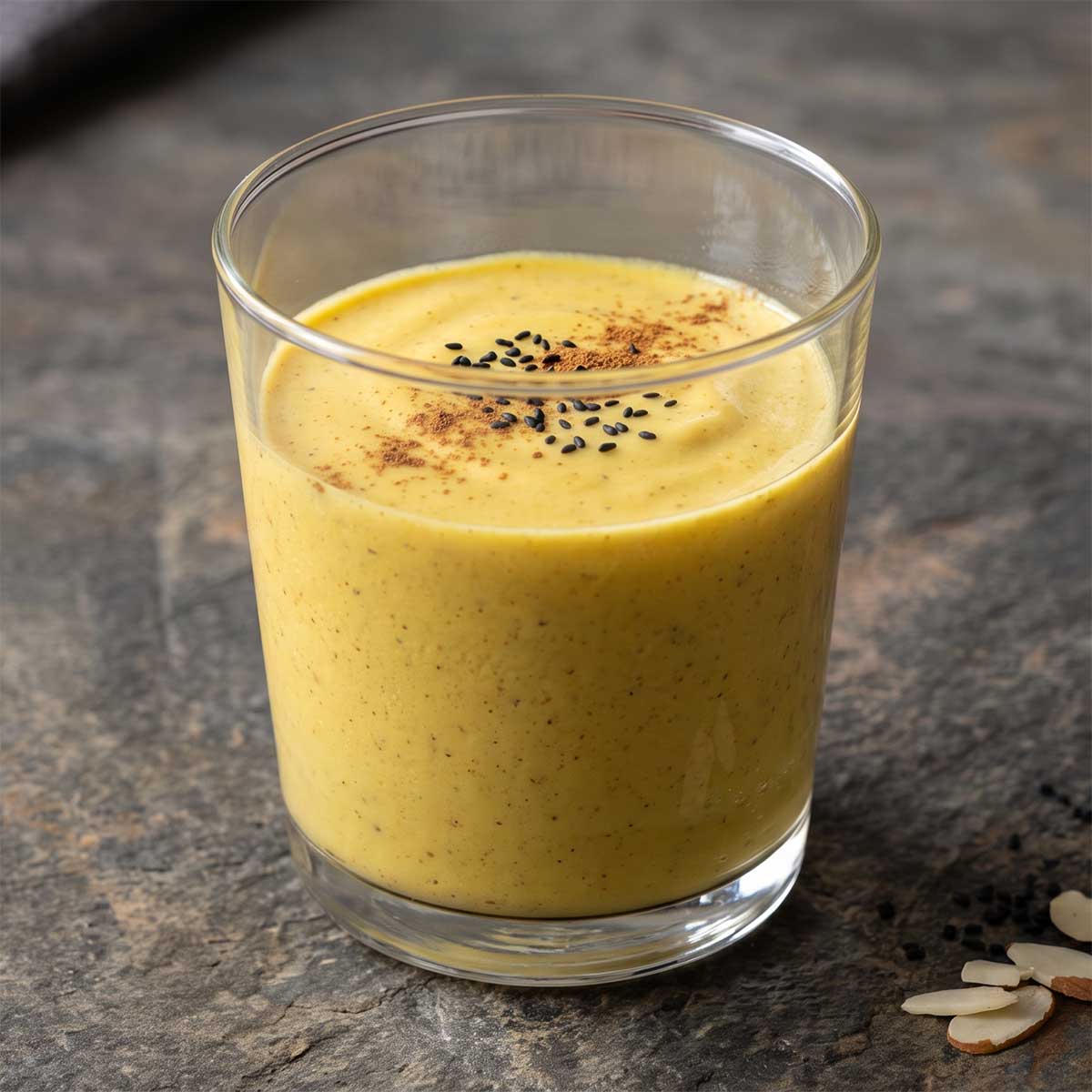
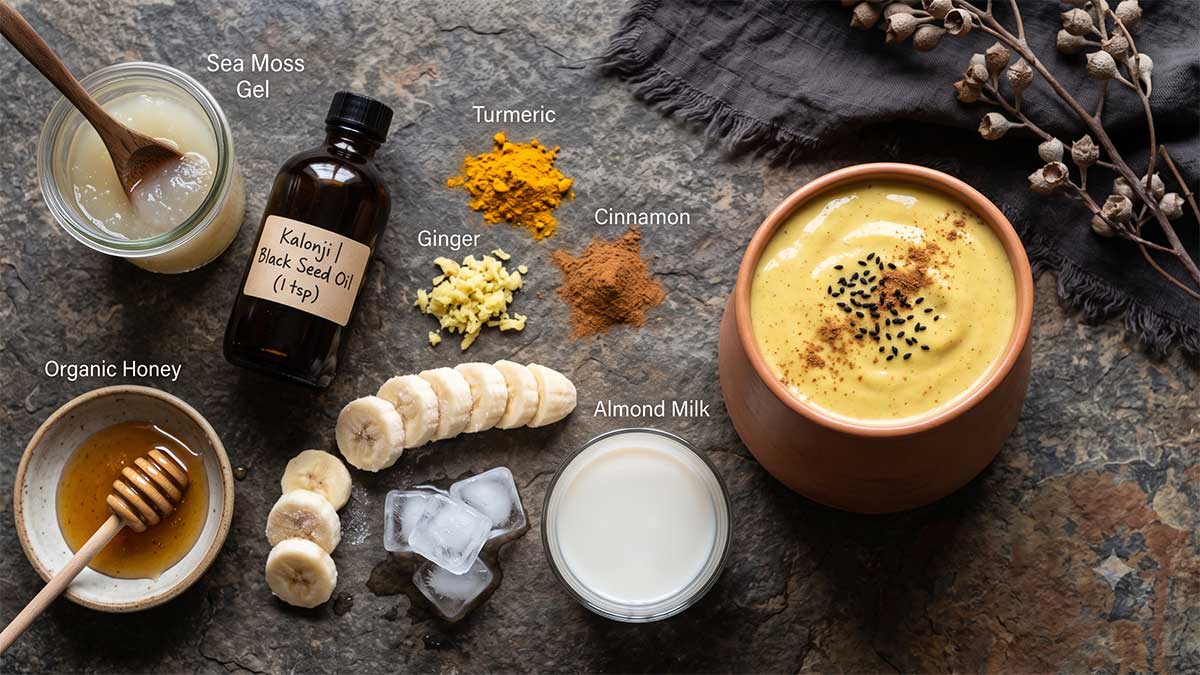
Black Seed Oil and Sea Moss Golden Smoothie
Ingredients
Equipment
Method
- Add the almond milk, sea moss gel, black seed oil, frozen banana, turmeric, honey, ginger, and cinnamon to a high speed blender.
- Blend on high for 30 to 45 seconds until completely smooth and creamy.
- Add the ice cubes and blend again for 15 to 20 seconds until the smoothie reaches a thick, frosty consistency.
- Pour into two glasses and serve immediately for the coldest, freshest texture.
Nutrition
Notes
Tried this recipe?
Let us know how it was!Frequently Asked Questions
For most healthy adults, daily doses between 500 milligrams and 2 grams appear well tolerated in clinical research. Doses above 2 grams daily have been associated with rare kidney and liver injury case reports, so staying within studied ranges and checking with a physician if you have existing kidney, liver, or thyroid conditions is the safer approach.
Yes. It may increase the effect of medications for type 2 diabetes and high blood pressure, and it may inhibit certain liver enzymes involved in drug metabolism. Anyone on prescription medication for these conditions, or on blood thinners, should talk to a doctor before starting it.
The evidence here is mechanistic rather than clinical. Its anti inflammatory and antioxidant properties may support scalp health and reduce dandruff related inflammation, but there is no dedicated randomized trial measuring hair regrowth specifically, so treat this as a supportive habit rather than a proven treatment.
Sharp, peppery, and slightly bitter, with a flavor some people compare to oregano crossed with black pepper. Mixing it into honey or a smoothie significantly softens the taste for people who cannot tolerate it straight.
Digestive and energy effects are sometimes reported within days. Skin, joint, and metabolic improvements documented in clinical trials generally took four to twelve weeks of consistent daily use to become measurable.
Laboratory analysis shows Ethiopian sourced oil tends to carry higher thymoquinone concentration and better oxidative stability than Egyptian or Syrian oil, based on direct comparative testing. It is a meaningful, measurable difference, though third party purity testing matters more than country of origin alone.
Note: This article is for informational purposes and does not replace medical advice. Talk to your doctor before starting any new supplement, particularly if you are pregnant, breastfeeding, managing a chronic condition, or taking prescription medication.